

Personal Account of Our Aid Project in Egypt by Bruno Karawani
Following our aid project in June 2026, our Karawani member Bruno Maul wrote this very personal account of his time in Egypt. In it, Bruno describes the impressions the team gathered on the ground and how heartwarming—yet at the same time often distressing—the encounters with war refugees from Sudan or Gaza were.
So small, yet so important!?
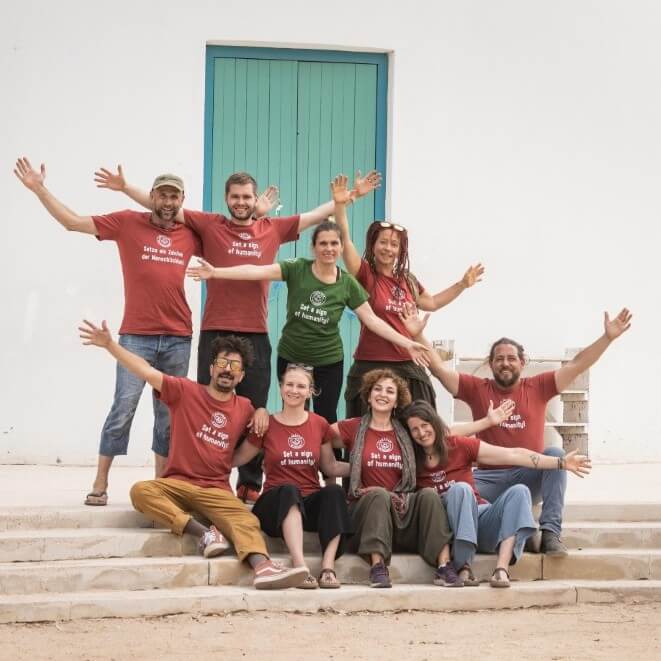
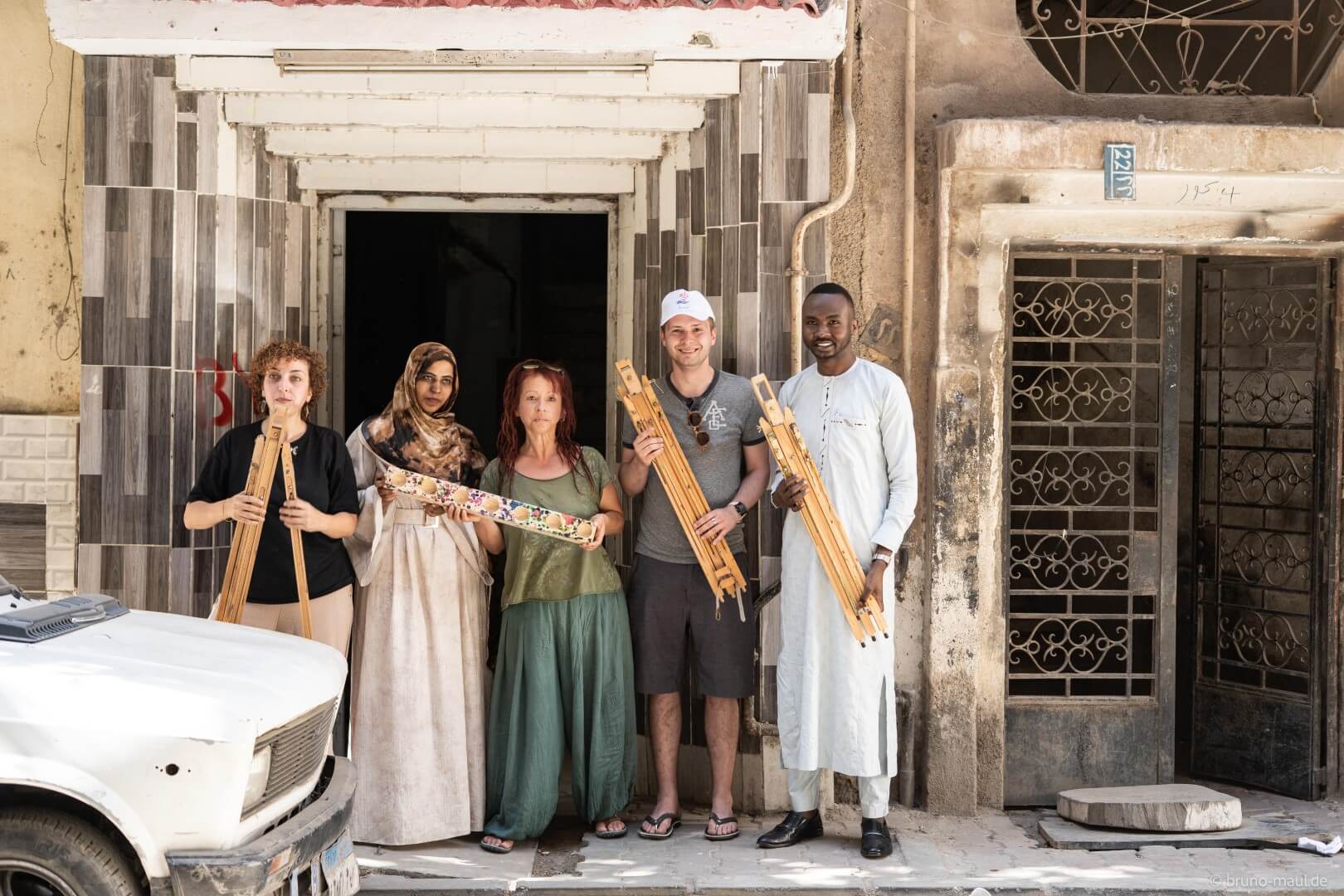
This time, the winds of humanity carried our caravan to Egypt from various directions. Some came from Austria, others from Germany; one held a Czech passport, another an Egyptian one—and finally, there was our dear Kamar from Lebanon.
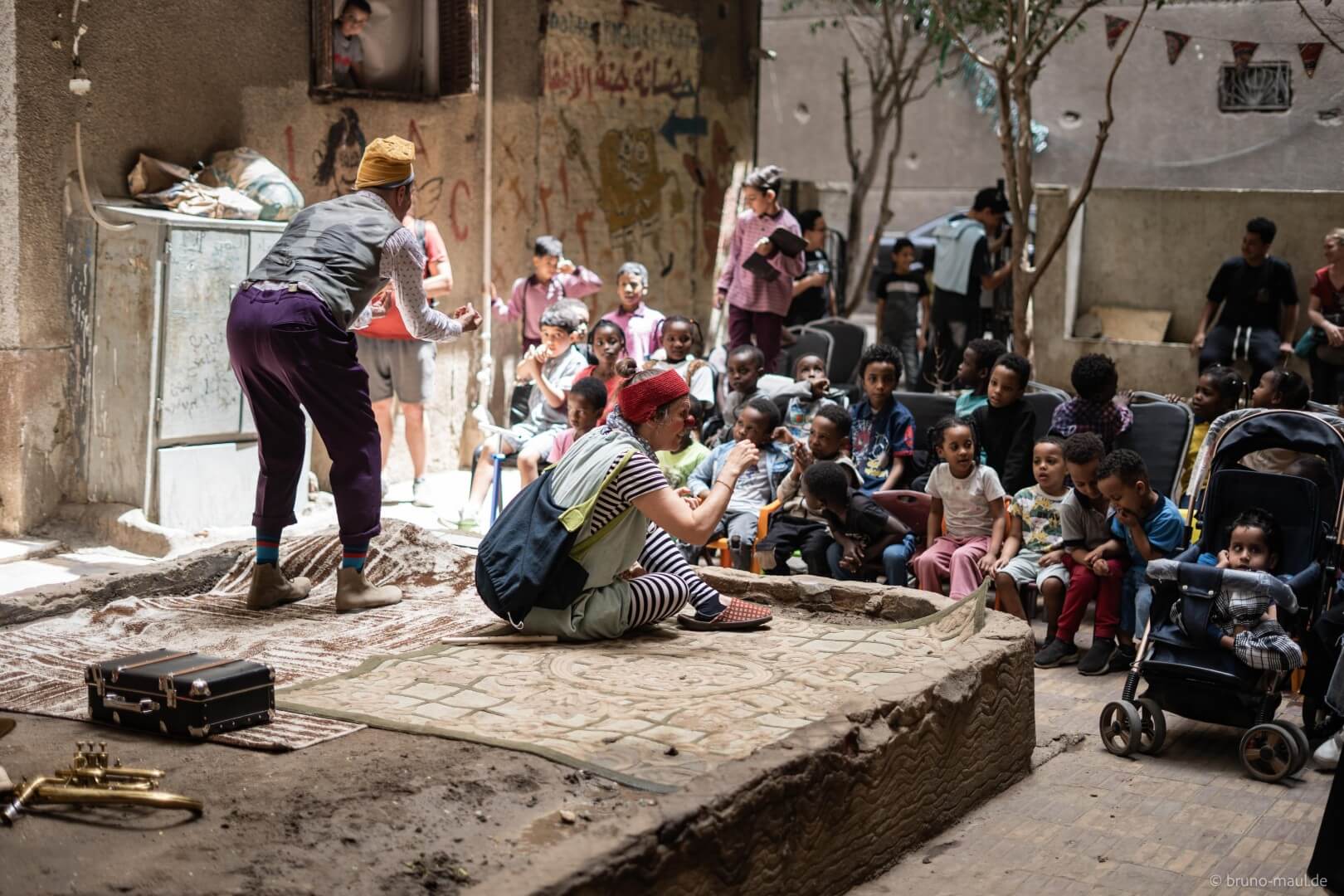
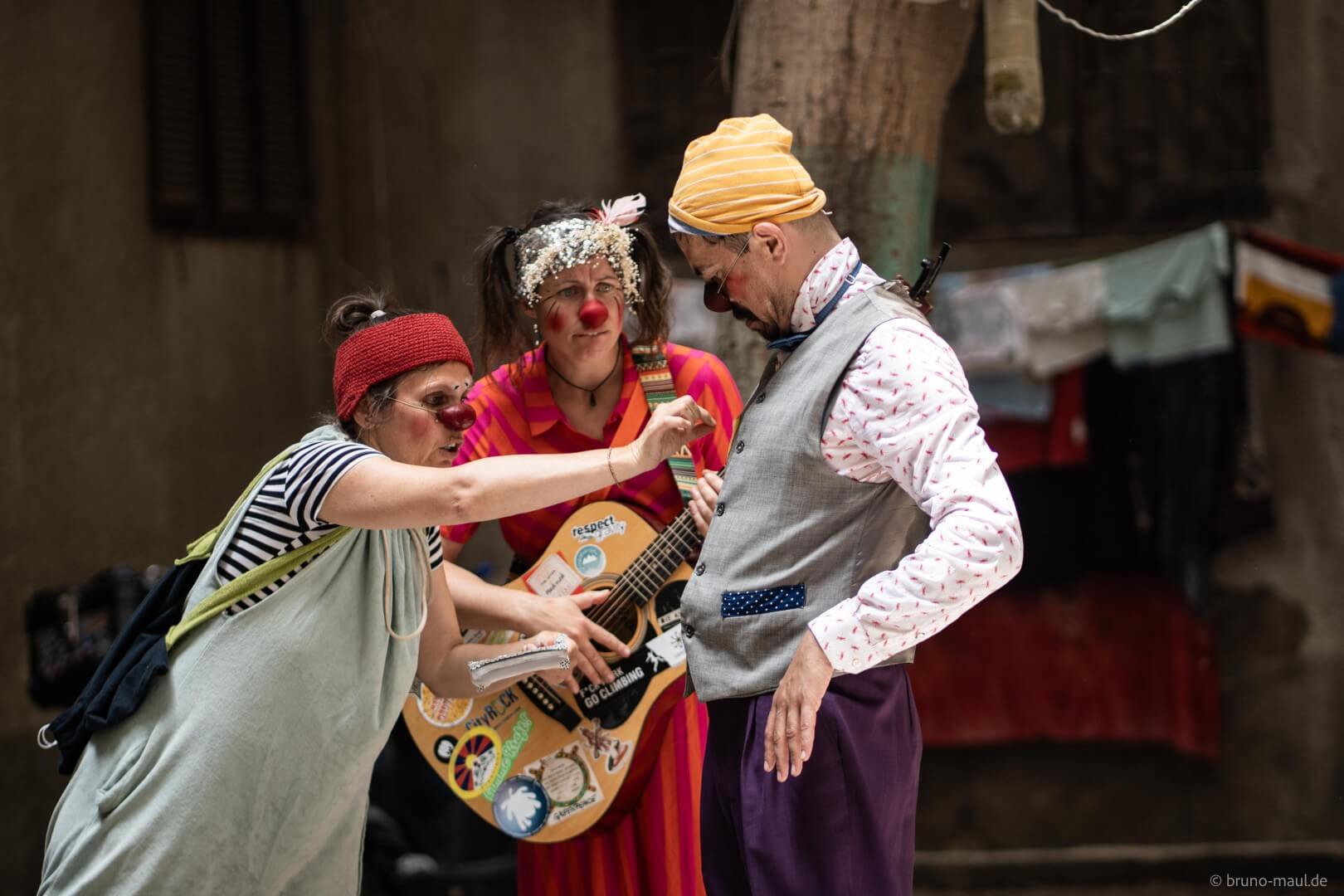
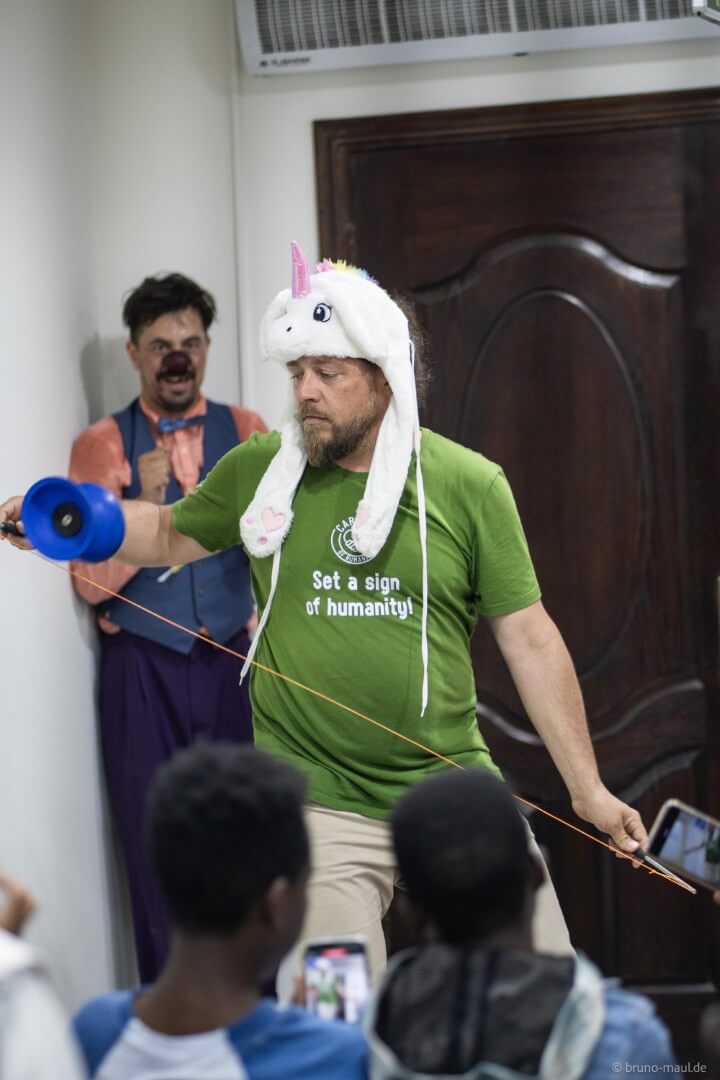
Anita, a clown from “Clowns Without Borders – Germany e.V.,” arrived with Kamar from Beirut, where she had already spent about a week performing clown shows with her Lebanese clown colleagues.
We immediately got a firsthand look at what it means to go about one’s work and daily life in the midst of war. Sitting in a room, hearing and feeling the explosions of Israeli bombs in the neighboring neighborhoods is part of everyday life; it’s hardly worth reacting to anymore. “Can you hear it too?” is the only question people always ask—as if to reassure themselves that they haven’t completely lost their minds—and then they reach for their smartphones to see which part of the city has been bombed, so they can immediately call their friends and relatives there to make sure they’re safe. “You can’t change anything at this point anyway,” says Kamar, “but that’s the only thing we can do.”
For now, Kamar is out of the war and part of our diverse group in Egypt. She and her mother will be staying here with her sister in Cairo for the time being. The strength of the group has carried us all through.
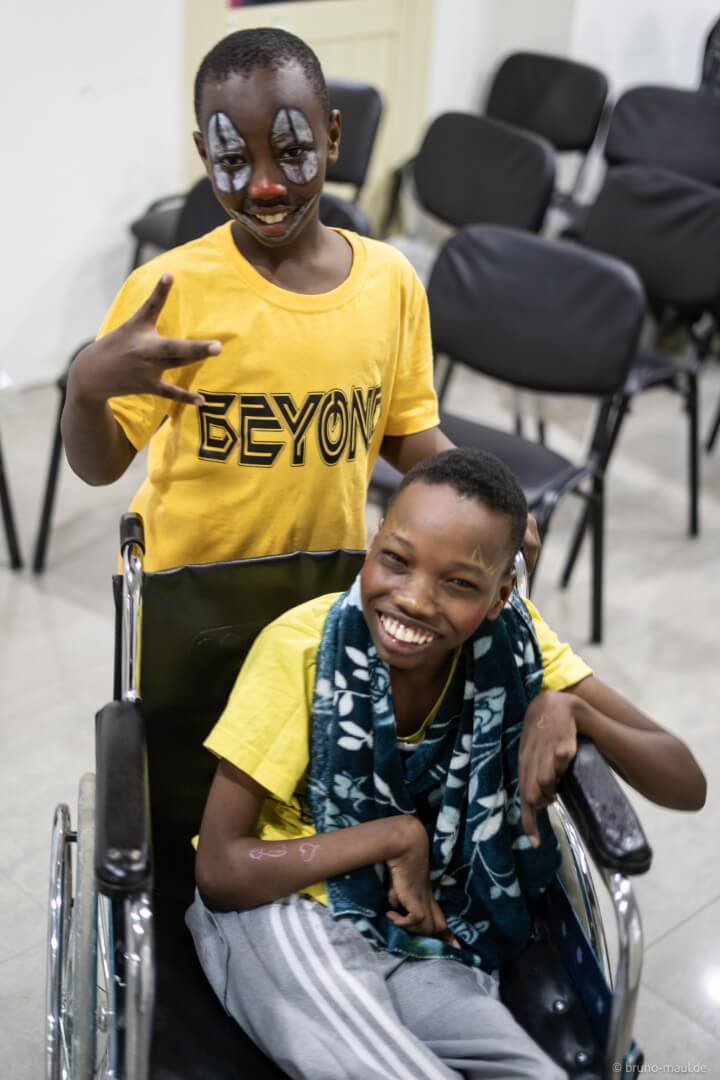
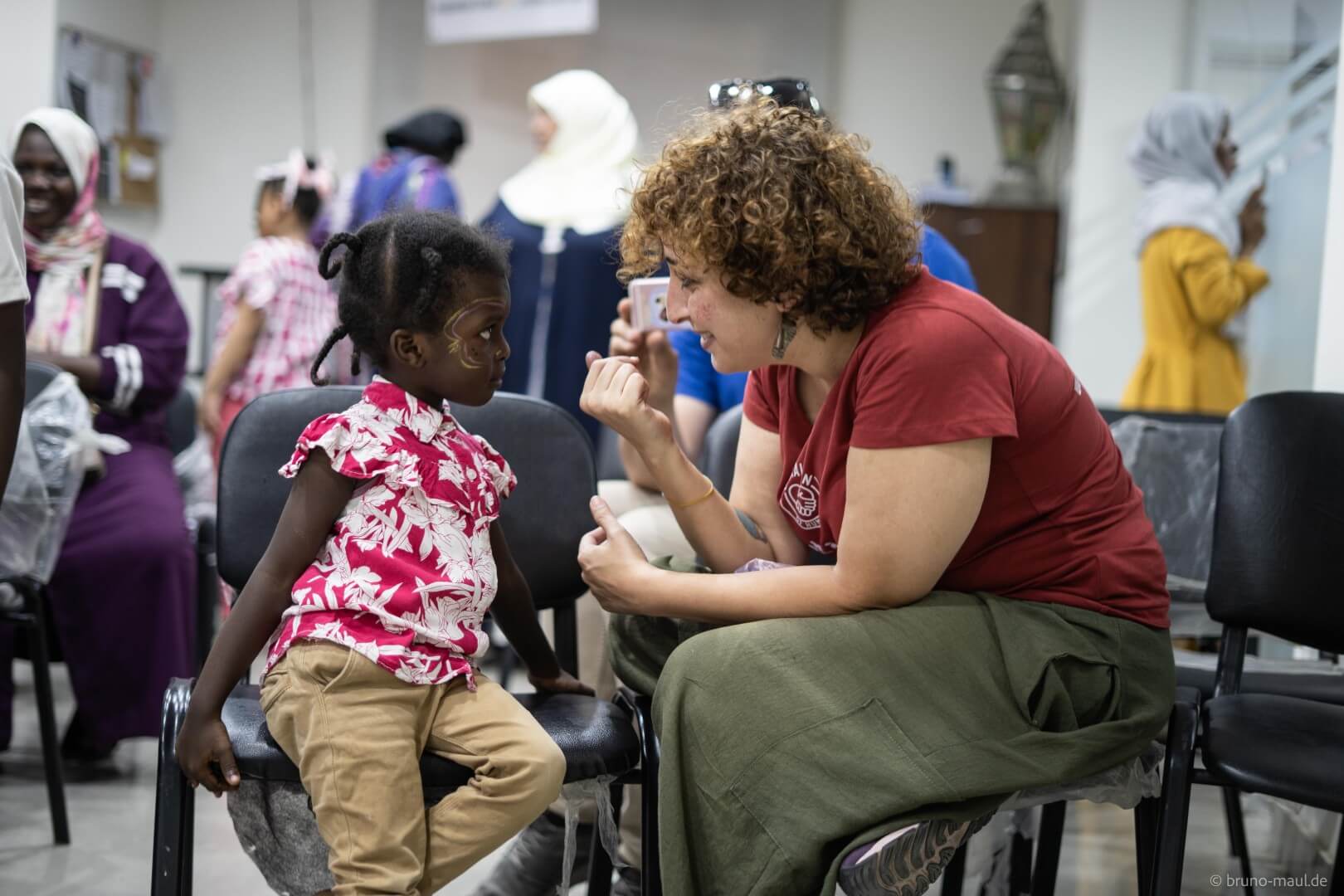
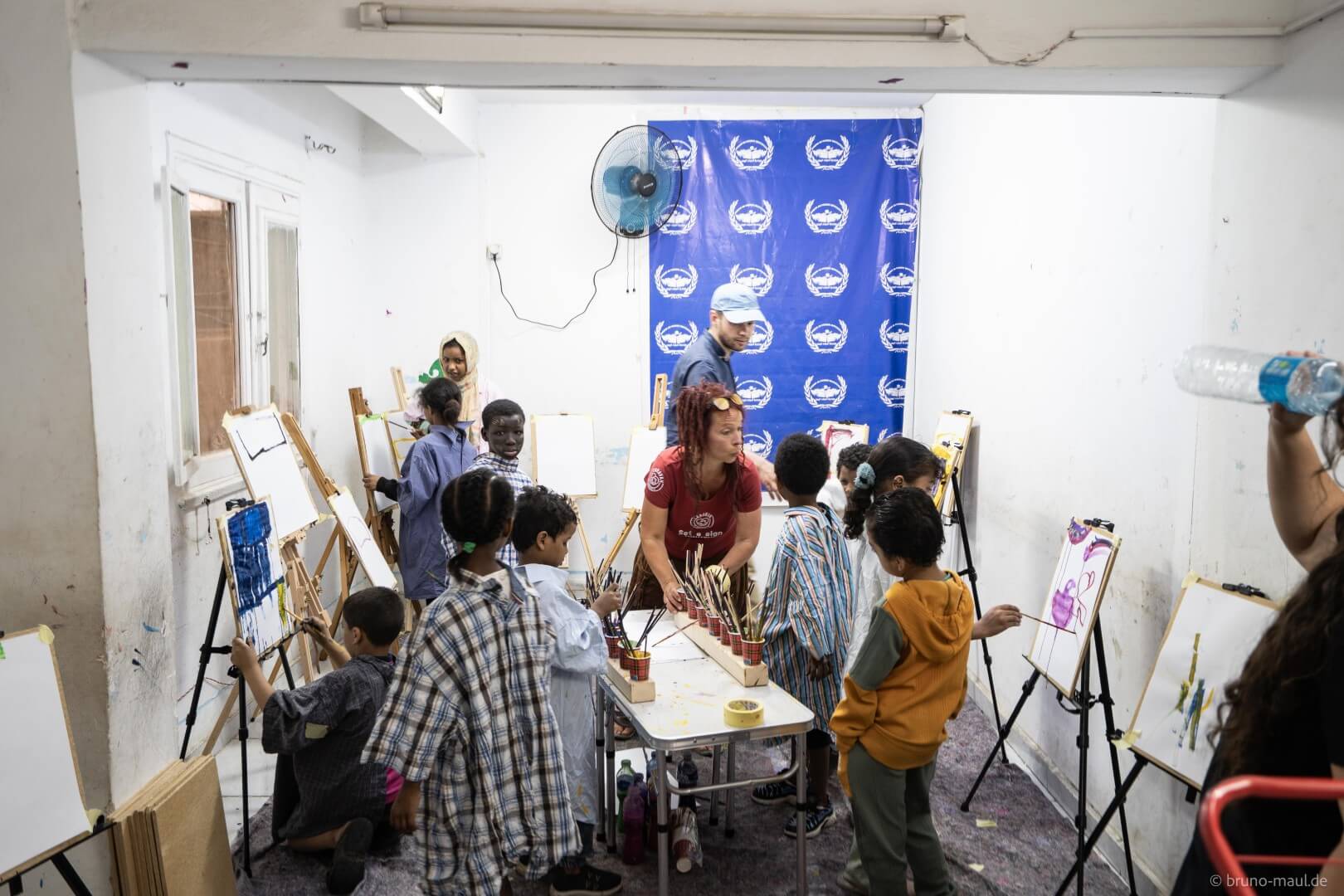
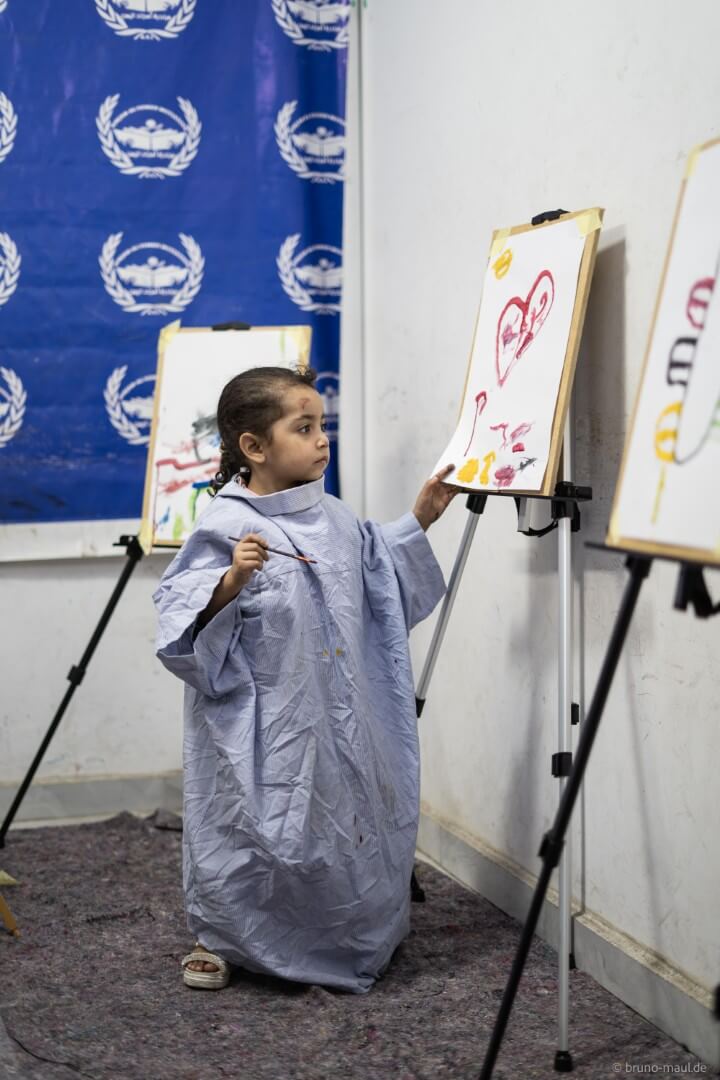
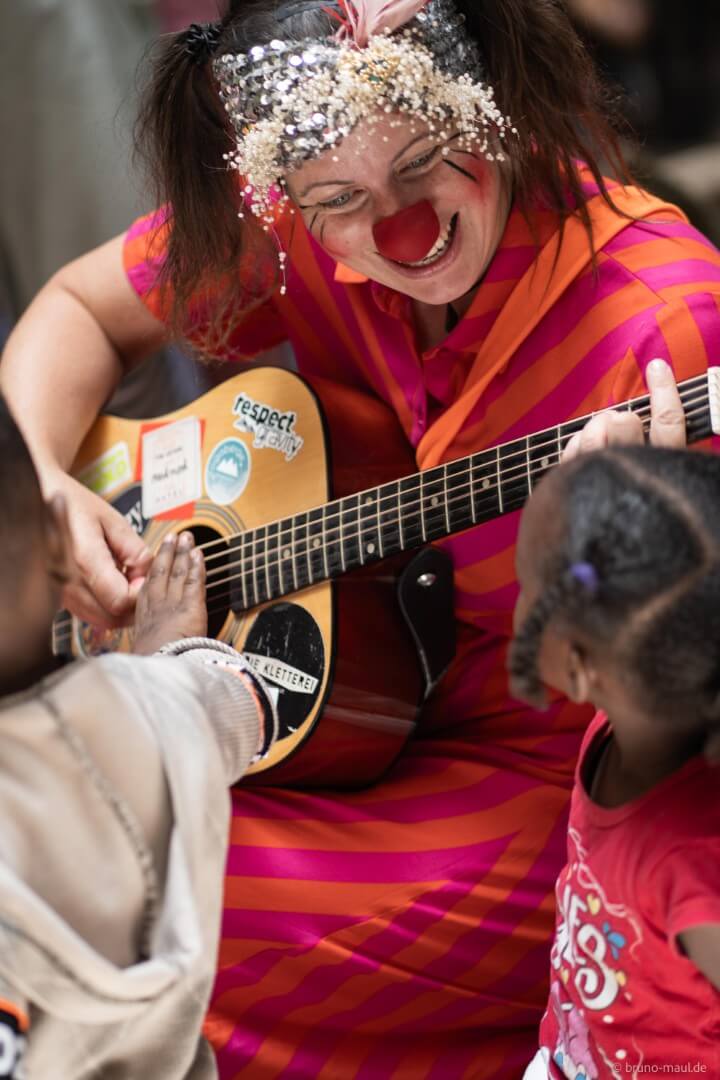
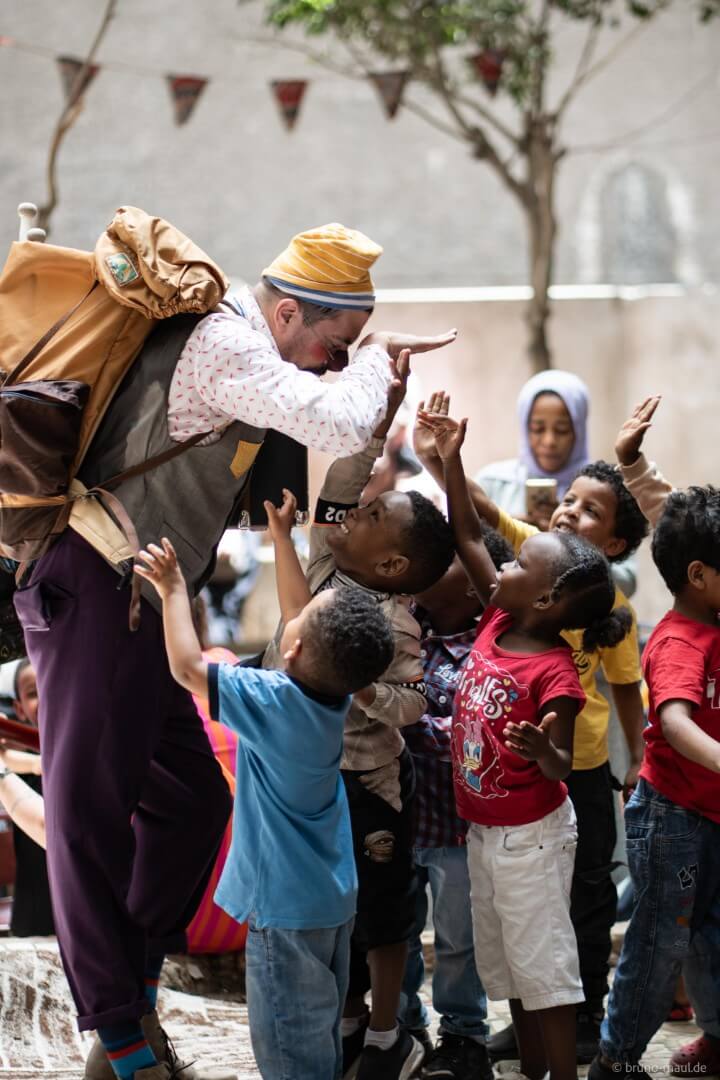
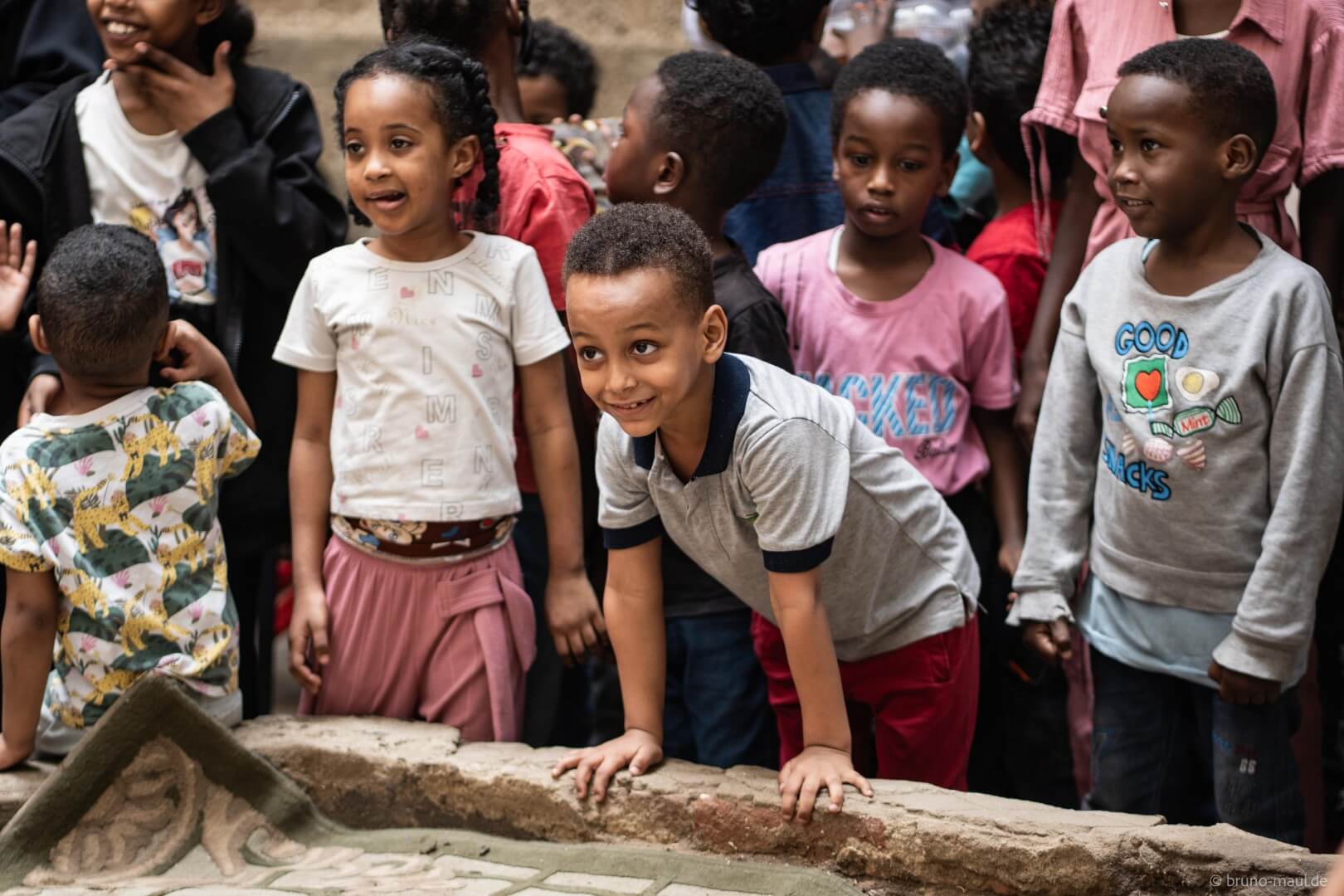
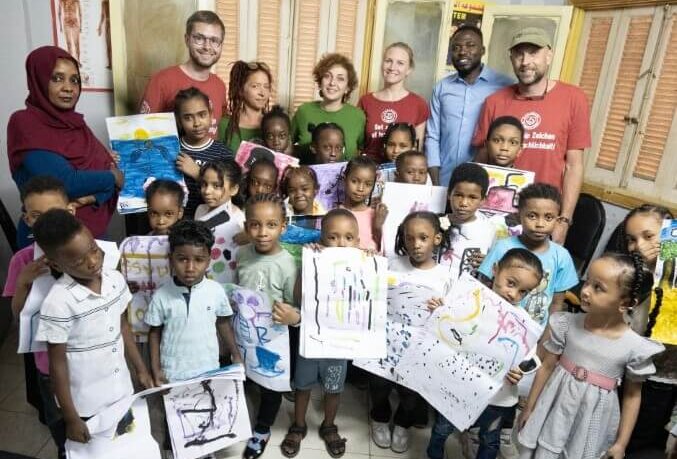
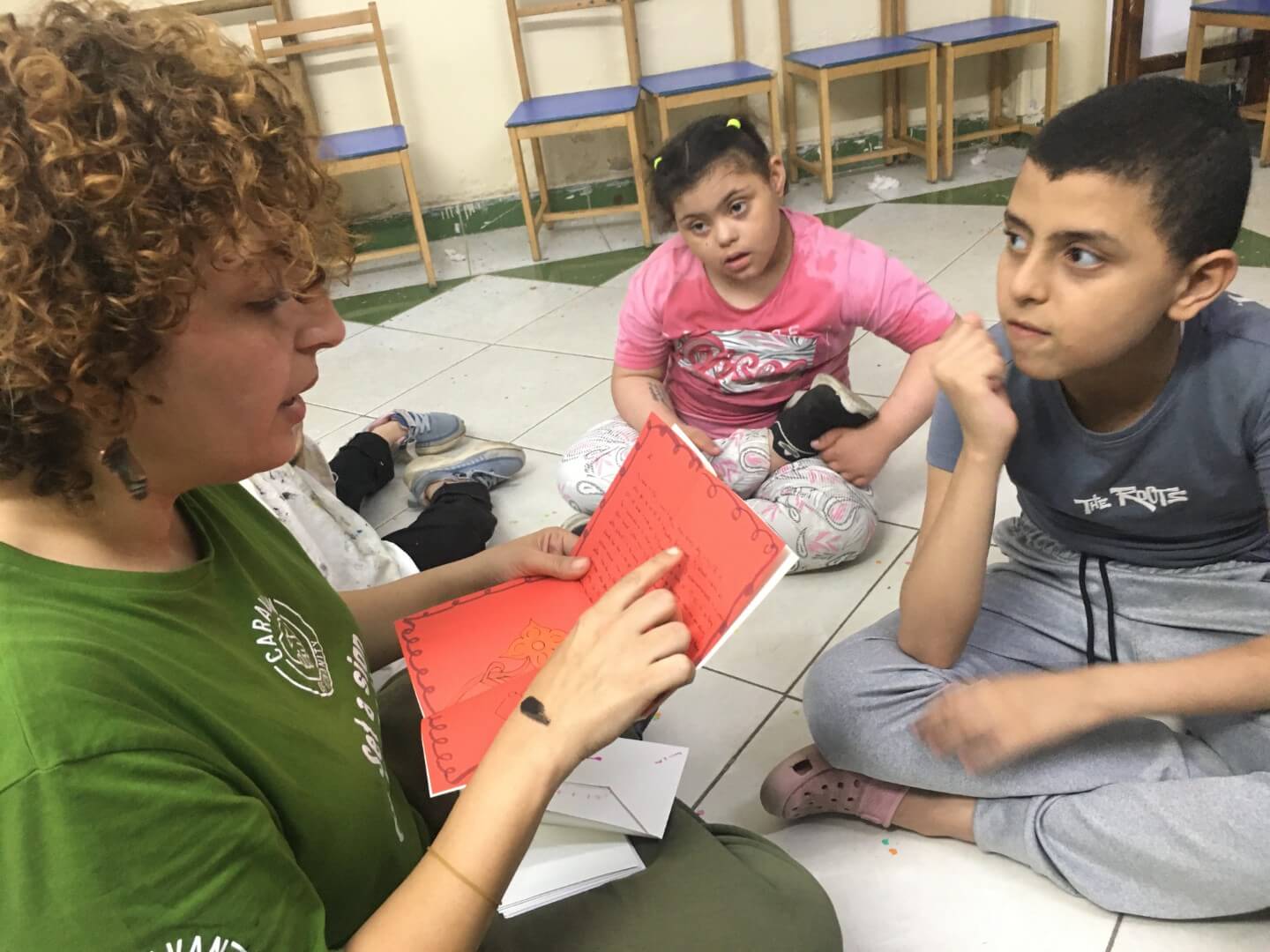
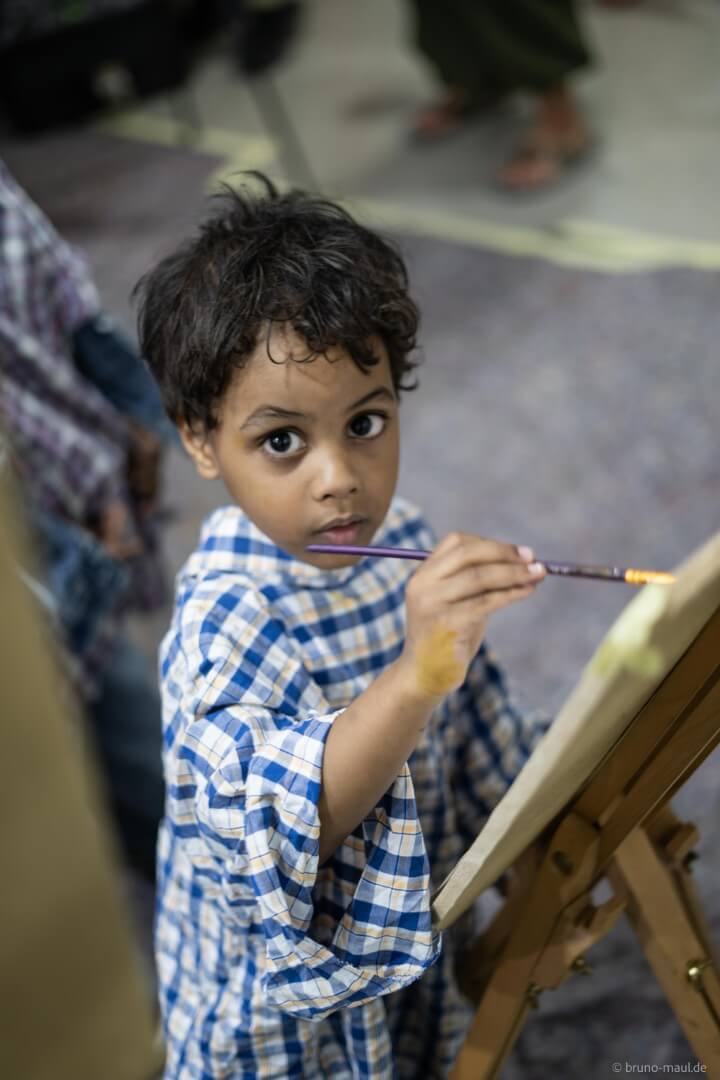
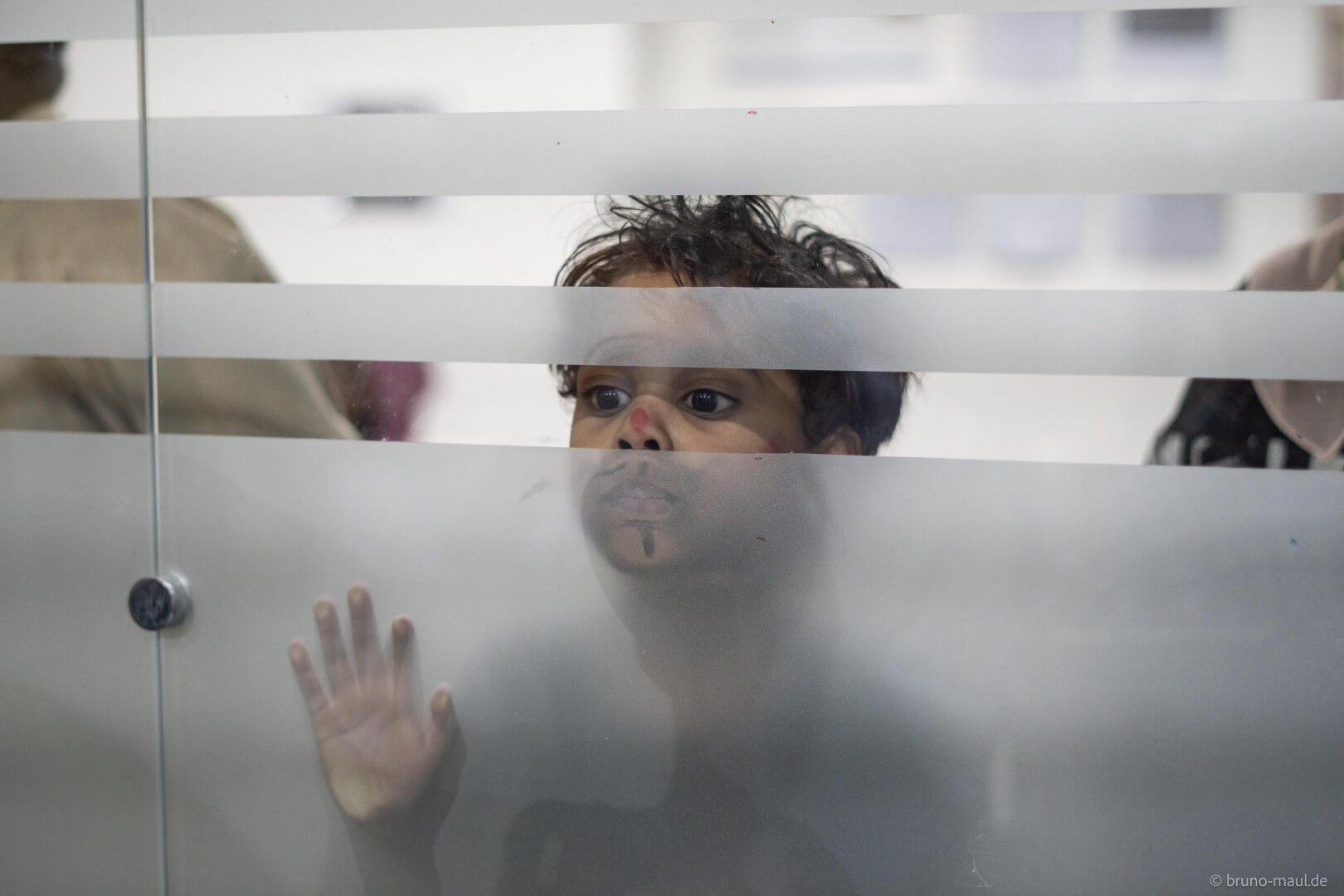
This time, instead of visiting large refugee camps with the clowns and the mobile art room, we went to smaller community centers—some of which were self-managed by refugees, and others run by “UNHCR” or “Terre des Hommes.” As a result, we had comparatively little contact with the refugees themselves. On other trips, we often spent hours with the camp residents even after the actual program was over. Nevertheless, the children’s joy at seeing the clowns and spending time painting was just as great!
It took quite a while to get from A to B in this city of 20 million people. Riding in an “Uber” through this chaos of cars, buses, and motorcycles—accompanied by the ever-present cacophony of honking horns—we got a sense of the enormous social contrasts between Cairo’s various neighborhoods. The “community centers” we visited were often located in the poorer to very poor neighborhoods. We were also well aware that, amid all the social inequality in this society, refugees are at the very bottom.
War refugees from Sudan even have to fear being arrested off the street and detained. People from Gaza are tolerated as “guests,” but do not have official “refugee status.” They are expected to return to their homeland as soon as possible so as not to completely depopulate Gaza or leaveit inthe hands of the Israeli occupiers. As in many other places around the world, no government or international aid is provided for them in Egypt.
What we found interesting was that these people—whether from Sudan, Yemen, Eritrea, or Gaza—rank their children’s education as the third most important thing for them! First and second, of course, are “daily bread” and shelter—that is, a roof over their heads. “We don’t know how long we’ll have to stay here—maybe it will be many years. Under no circumstances should our children completely fall behind in our home country’s education system!” these people tell us. That’s why classes are taught according to the respective curricula of their home countries.
For the most part, the schools must finance themselves—through tuition paid by parents or through donations and support from compatriots living in Western countries. Parents often do not have the necessary funds to pay for school, and support from abroad varies—sometimes it is more, sometimes less, and sometimes it stops entirely.
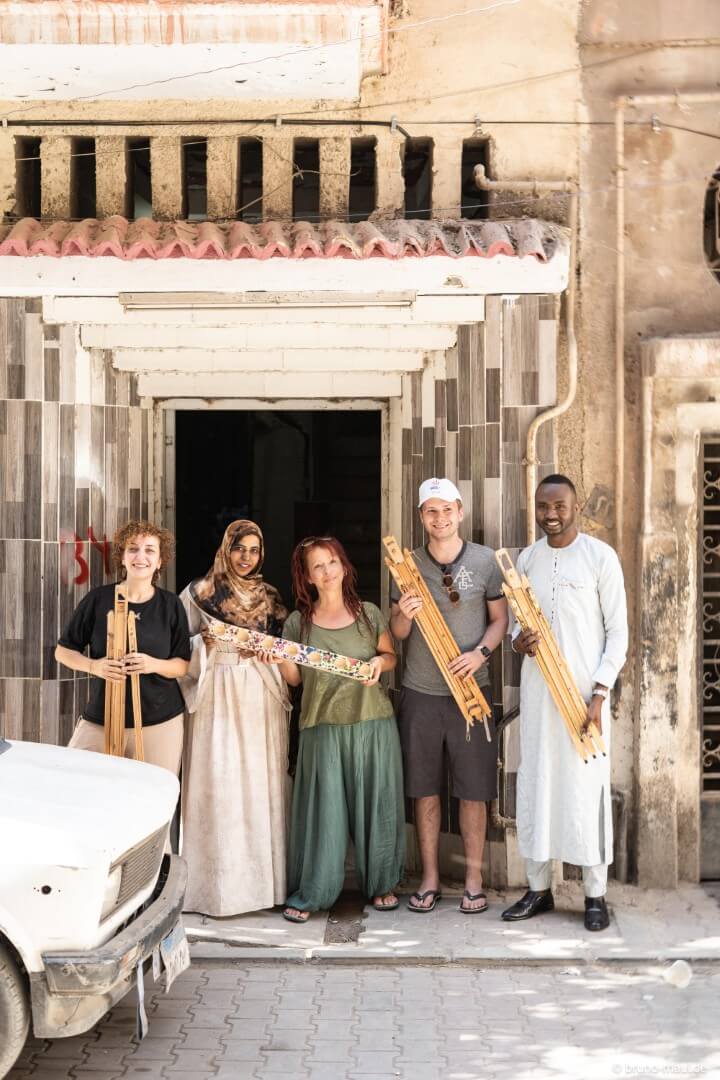
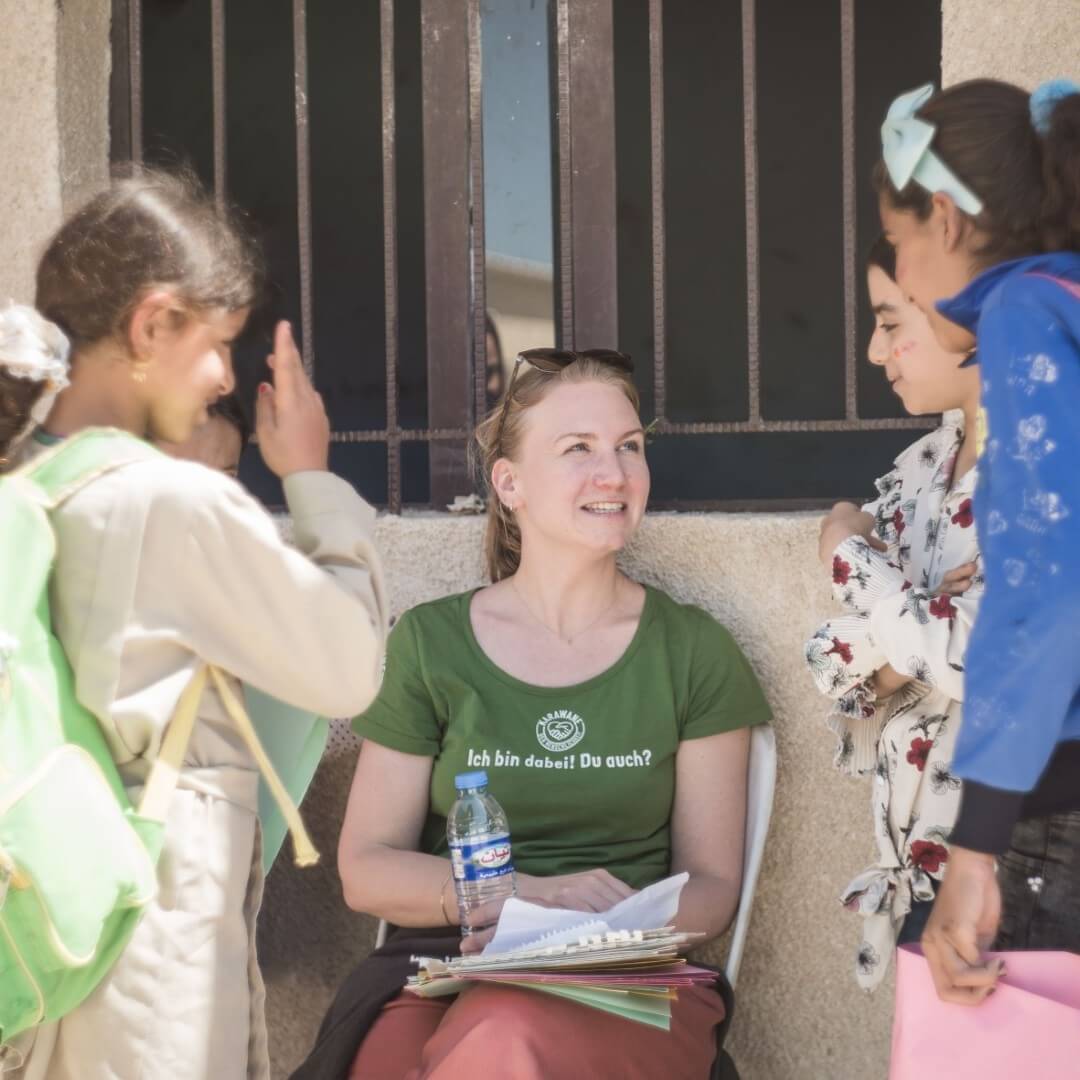
At the school run by the “Zaad” Community Center, we from the “Caravan of Humanity” were able to step in without any red tape and provide financial support. We were delighted to see how unexpected our swift action was for Aldouma and Thana, two of the founders of this Sudanese school. “Other aid organizations demand a myriad of documents, papers, and certificates, and then have to spend months deliberating in various committees to decide whether they can support us,” Aldouma explains. “By then, we might already be bankrupt and have closed the school.” We were at least able to sow a few small seeds here and now hope that they will sprout and bear fruit in the form of long-term education for the approximately 260 children.
We were deeply moved by our visit to a hospital. Among others, it houses many people from Gaza who were seriously injured—not to say “maimed”—by Israeli attacks. Thanks to a great deal of “luck”—and because they were still able to be transported—these mostly young people were able to leave Gaza to undergo emergency surgery here. A paraplegic woman in her mid-twenties who was thrown against a wall simply by the shock wave from an Israeli bomb detonating in the neighboring house, which crushed her spine; a young man who lay for hours under the rubble of his collapsed home, and another young woman whose entire arm was torn off by a grenade and who, as a result, will never be able to hold her three-month-old baby. Most say that the bombs, grenades—or whatever it was—struck the neighboring house. Because if your own house gets hit, no one survives.
Some of the hospital rooms smell like rotten meat because the amputated stumps keep getting infected and there is a shortage of medication to treat them.
Often, entire families live in the rooms. Some of the injured people’s children or close relatives were allowed to come along to the safe hospital and are sleeping on mattresses on the floor.
However, none of them are allowed to leave the grounds; they can only stretch their legs in the hospital’s small park. But those who no longer have legs or cannot walk for other reasons are confined to bed for months on end. Unless, that is, they are “lucky” enough to receive an electric wheelchair that can be controlled by a joystick, which gives them back a little bit of independence.
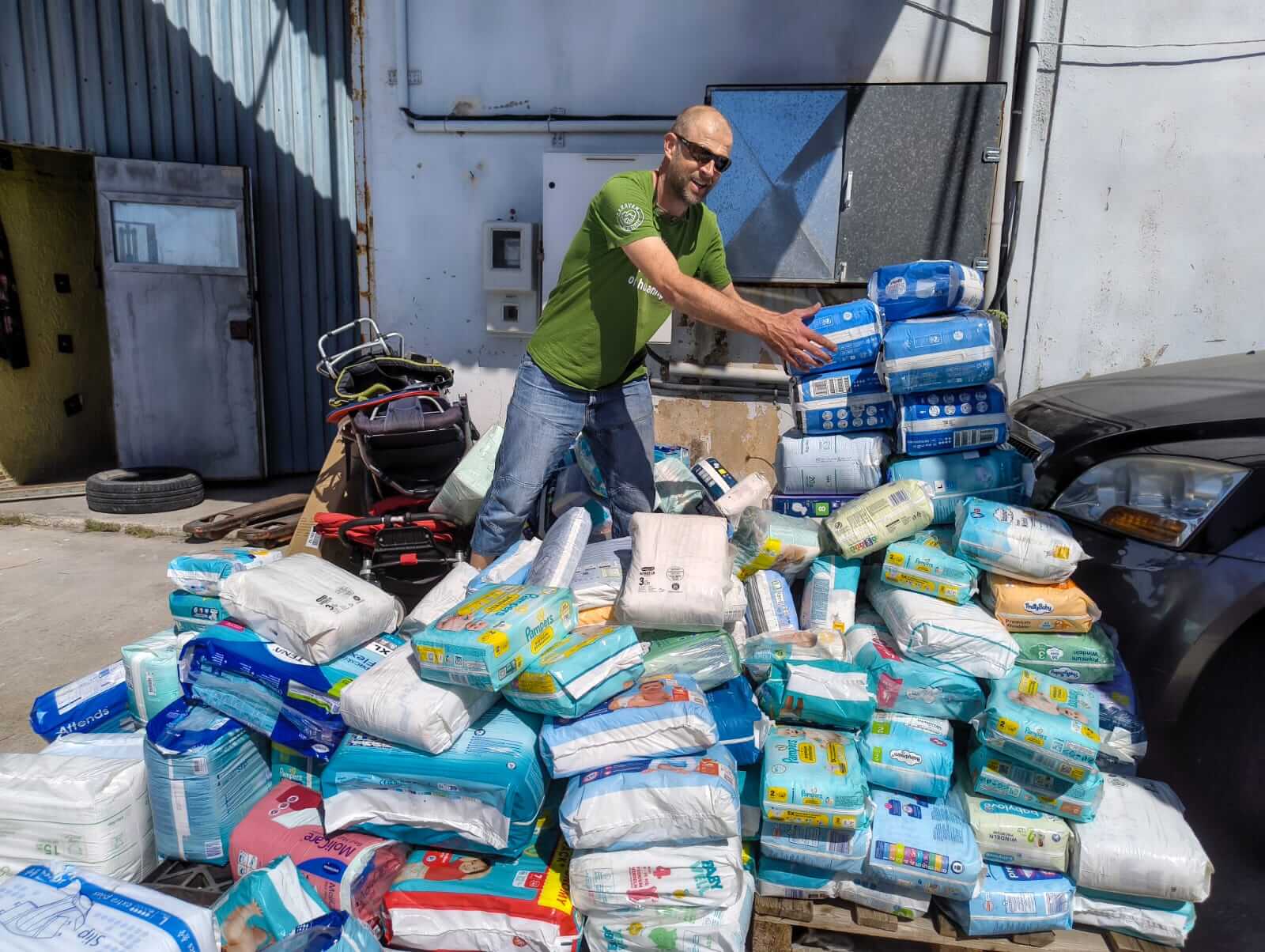
So, armed with a pen and paper, we went from room to room in the hospital to make a note of who needed what most urgently. We then bought wheelchairs, medication, diapers, baby formula, and other urgently needed items.
As a German, it was a strange feeling to encounter these people: a voyeur from the country that supplies Israel with the weapons used to inflict these mutilations!? No, we didn’t want to gawk at the victims of war, nor are the weapons from Germany being supplied in our name.
But even without our consent, Germany supplies a large portion of these weapons to Israel, so what we’re seeing here is pretty straightforward: “Made in Germany”!
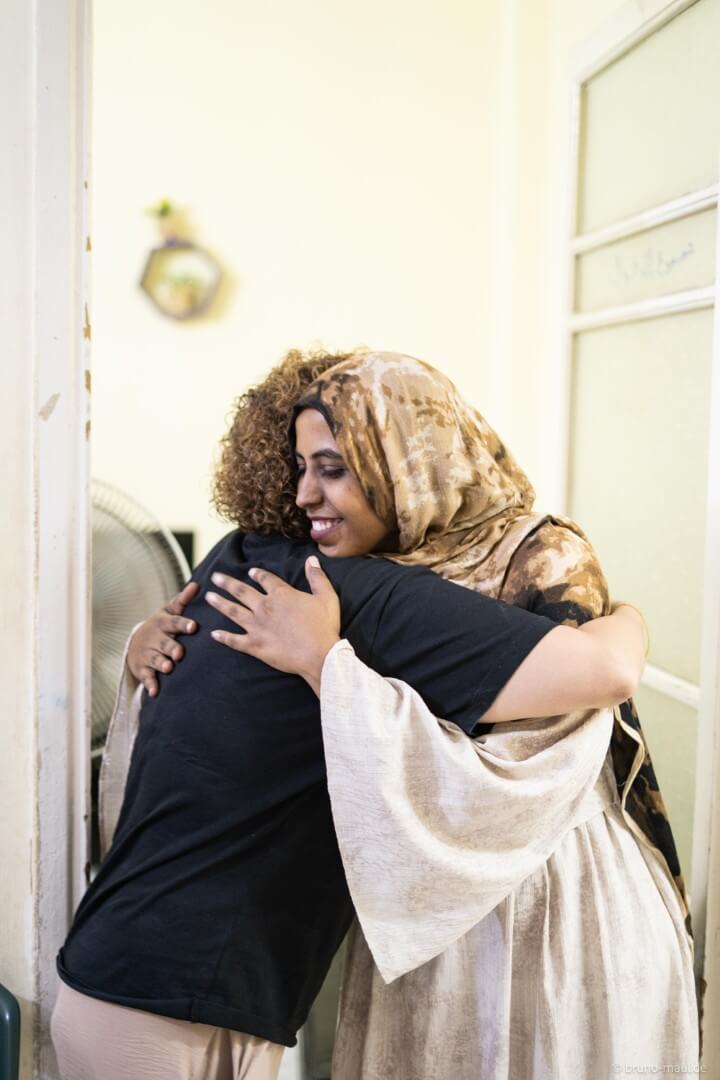
We were, in the truest sense of the word, mostly speechless, and we felt more like “throwing up” than talking. These people, however, were very open-minded toward us, and our assurances that this war and these arms shipments were not happening in our name proved unnecessary: “Otherwise, you probably wouldn’t be here!” a young, English-speaking woman replied to our attempt at an explanation, with a very conciliatory smile on her face and her hand on her heart.
Now that we’re back in Germany and Austria, along with a few nightmares, the familiar question has resurfaced: What’s the point of what we’re doing there, anyway? Given the sheer force and brutality of these realities of life, what difference does it make whether we do what we do—or simply let it be?
We won’t be able to magically bring about world peace. We’ll hardly be able to do anything to combat the misery. We won’t eliminate global injustice this way. And yet, for the few hundred people we were able to reach with our presence, it makes an enormous difference! Whether or not they have a school, whether or not they have a wheelchair, whether or not they can forget everything for a few hours to laugh and paint…
The distance doesn’t matter—it’s just the first step that’s difficult! And the Caravan of Humanity has long since taken those first steps!

Our donation account
Karawane der Menschlichkeit, Raiffeisenbank Güssing-Jennersdorf
IBAN: AT143302700000023408
BIC: RLBBAT2E027